Do musicians really have better memory than nonmusicians?
Global Collaboration Redefines How Cognitive Research Is Done
33 labs across 15 countries join forces to study musicians’ memory in one of the first multilab projects in psychology and neuroscience
PADUA and INNSBRUCK (Italy and Austria) — November 10, 2025
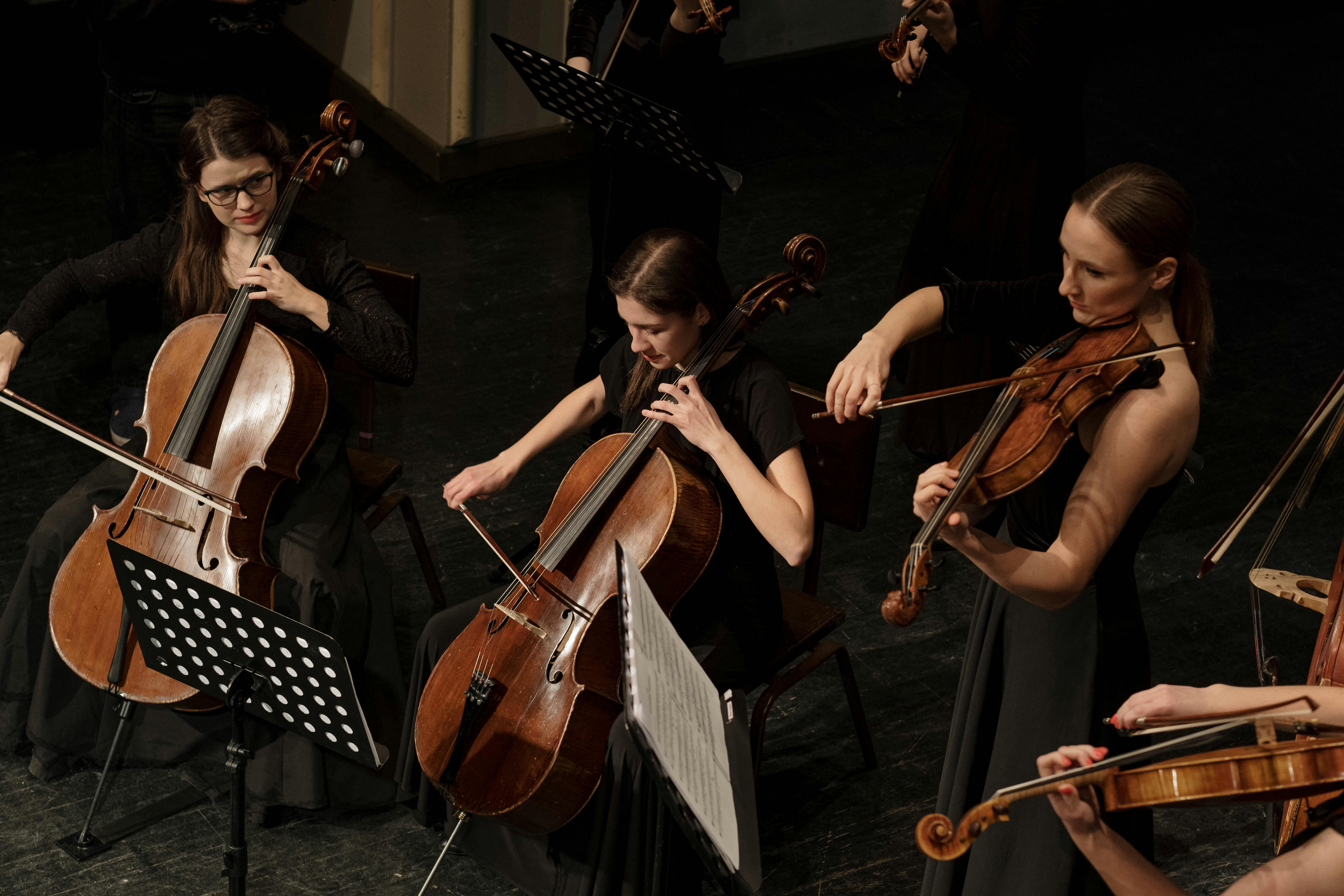
Do musicians really have better memory than nonmusicians? To answer this long-debated question, 110 researchers from 33 laboratories across 15 countries united under The Music Ensemble project — one of the first multilab collaborations in the psychological and neuroscientific study of music.
The project was coordinated by Massimo Grassi (University of Padua) and Francesca Talamini (University of Innsbruck) and has just been published as a Registered Report in Advances in Methods and Practices in Psychological Science (APS):
“Do Musicians Have Better Short-Term Memory Than Nonmusicians? A Multilab Study.”
https://doi.org/10.1177/25152459251379432
“This work represents a new way of doing science,” says Massimo Grassi. “Instead of competing for data or prestige, laboratories worked side by side, sharing protocols, materials, and decisions from start to finish. The study shows that collaboration — not competition — is the key to stronger, more transparent results.”
Unlike most traditional psychological studies, which often test only a few dozen participants per lab, The Music Ensemble coordinated identical experiments across multiple sites, testing 600 experienced musicians and 600 nonmusicians using a common protocol. The resulting sample is about 30 times larger than the average in previous studies, allowing the team to obtain robust, replicable estimates of the cognitive differences between groups.
Beyond the specific question of whether musicians enjoy cognitive advantages — they do show a clear benefit in musical short-term memory and smaller advantages in other domains — the project demonstrates the power of a community-driven, open-science approach.
Each participating lab contributed ordinary resources but achieved extraordinary collective results: preregistered hypotheses, shared materials, open data, and transparent analyses.
“Multilab collaborations are reshaping the way behavioral science is done,” adds Francesca Talamini. “They make research more inclusive, reproducible, and globally connected — even bringing together institutions from countries with very different scientific infrastructures.”
At a time of global division, The Music Ensemble sends a powerful message: science can cross borders and unite people through shared curiosity and cooperation.
Article:
Grassi, M., Talamini, F., & The Music Ensemble Collaborators (2025). Do Musicians Have Better Short-Term Memory Than Nonmusicians? A Multilab Study.
Advances in Methods and Practices in Psychological Science.
DOI: 10.1177/25152459251379432
Corresponding authors:
Massimo Grassi — University of Padua, Italy | massimo.grassi@unipd.it
Francesca Talamini — University of Innsbruck, Austria | francesca.talamini@uibk.ac.at
About The Music Ensemble
The Music Ensemble is an international multilab collaboration involving 33 research units from 15 countries. Its mission is to promote transparent, inclusive, and reproducible research in the psychology and neuroscience of music.