

From Psychology, a contribution to Mass Spectrometry
The study conducted by Avesani, Bonato et al. (2026) at the Department of General Psychology of the University of Padua and published in the scientific journal Molecules represents a contribution of great scientific and methodological relevance. For the first time, a technique typically belonging to the chemical and biological sciences, mass spectrometry, is systematically adopted within a psychology laboratory, here used to investigate volatile organic compounds (VOCs) emitted by plants. This interdisciplinary approach marks a decisive step toward the integration of advanced methodologies from the hard sciences into the cognitive and behavioral sciences.
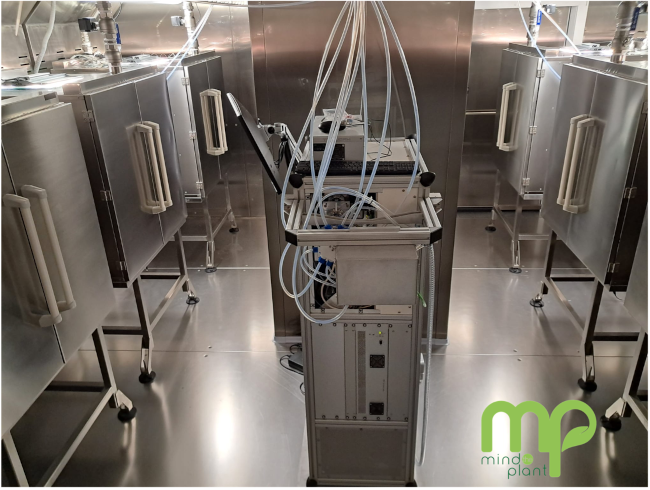
In particular, the unique opportunity to use a VOCUS-CI-TOF Time-of-Flight Mass Spectrometer at the Mind(the)Plant Laboratory made it possible to compare two different reactors employed in direct-infusion mass spectrometry, PTR-MS and AIM-MS. The results demonstrate that the AIM reactor, an innovative technology that has so far been tested in only a limited number of studies, is capable of detecting a significantly larger number of compounds than PTR. The findings indicate that AIM-MS allows the identification of a broader range of chemical signals, including numerous lipid- and amino acid–derived compounds, thereby substantially expanding the possibilities for volatilome analysis, namely the study of volatile chemical molecules emitted by living organisms.
The research is part of the ROOMors project, which aims to understand the chemical foundations of plant communication and social interactions, viewing plants as genuine communicative systems. Although the focus of the study is botanical in nature, its implications extend well beyond this field: the proposed approach opens the way to future applications in humans, suggesting the potential use of mass spectrometry for the study of communicative, diagnostic, forensic, emotional, and social processes. From this perspective, the work of Avesani, Bonato, and colleagues helps to open new frontiers for the application of advanced chemical technologies in the cognitive and behavioral sciences, fostering an increasingly close dialogue between disciplines that have traditionally remained separate.
Avesani S, Bonato B, Simonetti V, Guerra S, Ravazzolo L, Gjinaj G, Dadda M, Castiello U. Comparing Proton Transfer Reaction (PTR) and Adduct Ionization Mechanism (AIM) for the Study of Volatile Organic Compounds. Molecules. 2026; 31(3):402. https://doi.org/10.3390/molecules31030402
Link: https://www.mdpi.com/1420-3049/31/3/402