


Psychodebates
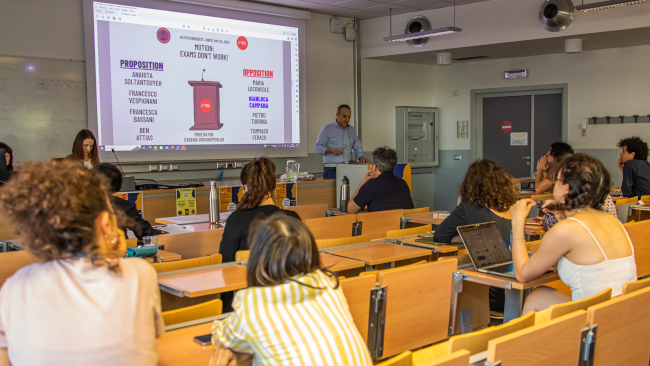
The PsychoDebates are part of the DPG Wellbeing Program because debating is not merely a rhetorical exercise, but a transformative experience that cultivates self-awareness, emotional resilience, and relational maturity. Through debate, participants learn to listen actively, engage respectfully with different viewpoints, and express their own ideas with clarity and confidence. In this way, academic debate becomes a form of empowerment—nurturing not only intellectual growth, but also the emotional and social skills that sustain a balanced, inclusive, and thriving academic community.
STAY TUNED!
The next debate is scheduled for ...
The motion will be: ...
Why a debate?
Academic debates aim to offer the academic community an opportunity to collaborate and engage in a novel and unconventional learning environment. Debating controversial issues promotes self-reflection, critical thinking, teamwork, and public speaking skills. Moreover, participating in a debate educates the audience to listen carefully to opposing arguments, question their own position, appreciate the possibility of changing their opinion, and refine or enrich their reasoning with new perspectives.
When the topic of the debate lies within the multifaceted field of psychology—here come the PsychoDebates!
Why does the DPG support the PsychoDebates within the Wellbeing Program?
Debating is not merely a rhetorical exercise — it is an experience of active listening, understanding others, mutual respect, and emotional regulation. These are all fundamental elements for both individual and collective wellbeing, in academic training as well as in everyday life.
Outline of the Structure of a Debate
Each debate focuses on a controversial issue (motion) — for example, “Animal Testing Should be Banned: for the Cure or for the Creature?”
The arguments and the team of speakers in favor of the motion constitute the Proposition, while the arguments and the team against the motion form the Opposition. A Moderator (either a professor or a student) chairs and coordinates the entire debate. The moderator introduces the motion and the teams, ensures that the rules are respected, and supervises the traditional final voting.
Each speaker has a limited and predefined time (e.g., 3 minutes) to present their arguments and persuade the audience to support their position and, consequently, their team. The debate concludes with a rebuttal, in which one member from each team (typically the leader) summarizes their position and responds to the issues raised by the opposing team. Depending on the format, the debate may be followed by short interventions from the audience, under the guidance of the moderator.
Organization
An appointed Panel, composed of students and professors, is responsible for:
- Organizing the annual calendar of debates;
- Receiving and evaluating proposals for new debate topics;
- Approving and supervising the organization of each individual debate carried out by the Debate Organizers.
Contacts
For more details to submit a debate proposal, and/or to participate as a speaker: debate.psicologia@unipd.it
Past debates
8. Mind Matters: Protect the Smartest!
December 4, 2025
7. Animal Testing Should Be Banned: For the Cure or For the Creature?
December 4, 2024
6. Keep Up Appearances!
November 13, 2024
5. Losing An Animal Friend Can Be More Painful Than Losing A Human Friend
November 21, 2023
4. Multiculturalism Has Failed! It Is Time to Re-evaluate Cultural Inclusion
June 14, 2023
3. EXAMS DON'T WORK! It is time to re-evaluate exam modalities
May 24, 2023
2. Can We Get Rid of Gender Binarism?
May 10, 2023
1. Is Killing Animals Inevitable?
December 15, 2022
VIDEO